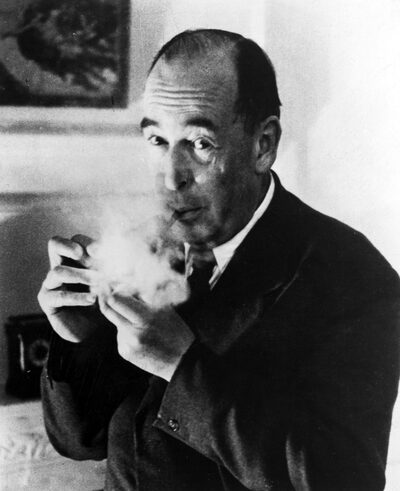
C.S. Lewis
British author, literary scholar, and Christian apologist whose works of fiction and theology have introduced millions to the Christian faith.
Key Works
Mere Christianity(1952)
Based on BBC radio talks, a clear and compelling case for the core beliefs shared by all Christians.
The Screwtape Letters(1942)
A satirical novel written as letters from a senior demon to a junior tempter, revealing the subtleties of spiritual warfare.
The Chronicles of Narnia(1950-1956)
A seven-book fantasy series for children, rich with Christian symbolism and beloved by readers of all ages.
The Problem of Pain(1940)
A philosophical exploration of why a good God permits suffering.
A Grief Observed(1961)
A raw, honest journal written after the death of his wife, wrestling with grief and faith.
Clive Staples Lewis — known to friends as "Jack" — was an Oxford and Cambridge literary scholar who became the 20th century's most widely read Christian writer. A committed atheist in his youth, Lewis's conversion to Christianity in 1931 set the course for a remarkable literary career that continues to shape faith and imagination worldwide.
His Story
Lewis grew up in Belfast, Ireland. The death of his mother when he was nine shattered his childhood faith. As a teenager and young adult, he was a convinced atheist and materialist. It was through the influence of friends — particularly J.R.R. Tolkien and Hugo Dyson — and his own intellectual honesty that Lewis came, reluctantly, to faith.
He described himself as "the most dejected and reluctant convert in all England," dragged kicking and screaming into the Kingdom. Yet once convinced, he devoted his extraordinary gifts of clarity and imagination to communicating the faith.
His Legacy
Lewis's genius was making complex theology accessible and compelling:
- Mere Christianity remains one of the most recommended books for people exploring the Christian faith
- The Chronicles of Narnia have sold over 100 million copies and introduced generations of children to themes of sacrifice, redemption, and grace
- The Screwtape Letters revealed the psychology of temptation with wit and precision
- His academic work on medieval and Renaissance literature at Oxford and Cambridge earned him respect in secular and religious circles alike
Why Read Lewis Today?
Lewis speaks to the modern skeptic because he was one. His arguments for faith are not sentimental — they engage honestly with doubt, suffering, and the objections of unbelief. At the same time, his imaginative works (Narnia, the Space Trilogy) show that Christianity is not just true but beautiful. For anyone who thinks faith requires checking your brain at the door, Lewis is a powerful corrective.