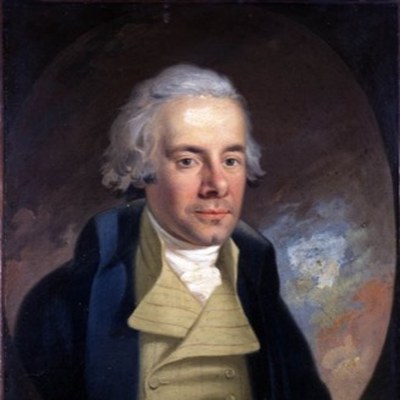
William Wilberforce
Evangelical member of Parliament whose Christian conviction drove a twenty-year campaign that abolished the British slave trade and, ultimately, slavery itself.
Key Works
A Practical View of Christianity(1797)
His call for nominal Christians in comfortable Britain to embrace real, heartfelt faith — a surprise bestseller that shaped evangelical life for decades.
Abolition Speech in the House of Commons(1789)
His first great parliamentary speech against the slave trade, laying out its horrors over several hours and launching the long abolition campaign.
William Wilberforce was a member of the British Parliament whose evangelical conversion turned him into the leading voice against the slave trade. For two decades he brought abolition bills before the House of Commons, enduring defeat after defeat, until the trade was finally outlawed in 1807 — and slavery itself was abolished in the British Empire as he lay dying in 1833.
His Story
Wilberforce was born in Hull, England, to a wealthy merchant family and entered Parliament at just twenty-one. Witty, charming, and a brilliant speaker, he seemed destined for a comfortable political career. Then, in his mid-twenties, he experienced what he called "the Great Change" — a deep evangelical conversion that made him question whether he should leave politics altogether.
The former slave-ship captain John Newton, by then a pastor and the author of "Amazing Grace," urged him to stay, believing God had placed him in Parliament for a purpose. In 1787 Wilberforce took up the cause of abolition, and in 1789 he delivered his first great speech against the slave trade. Working with a remarkable circle of Christian friends based in Clapham, he campaigned year after year despite illness, ridicule, and powerful opposition, until the Slave Trade Act passed in 1807. Three days before his death in 1833, he learned that the bill to abolish slavery itself was assured of passing.
His Legacy
Wilberforce showed what patient Christian conviction can accomplish in public life:
- He led the campaign that ended the British slave trade in 1807 and lived to see slavery's abolition secured in 1833
- His book A Practical View of Christianity called a complacent nation back to genuine faith
- With his Clapham friends he supported missions, education, and dozens of efforts to relieve the poor and reform British society
- He proved that politics, pursued with integrity and perseverance, can be a calling from God
Why Read Wilberforce Today?
Wilberforce never separated his private faith from his public work — he believed the gospel demanded both a changed heart and a changed society. His story is an antidote to cynicism: a reminder that real evil can be defeated, but rarely quickly, and that faithfulness often looks like losing for twenty years before winning. For Christians wondering whether their daily work matters to God, Wilberforce is a powerful encouragement.